



Last week, I went to a networking event for people using podcasting to talk about climate. I was chatting with two super interesting men, both in media, about our messages and then our audiences.
I shared that my intended, but not exclusive, audience is professional working mothers over the age of 35 with children still living at home. While anyone might appreciate my work, I’m working on a book and a publisher would ask for at least that specific of an audience, if not even more detail (geography, profession, economic status, etc.).
I told them how my goal is to tap into Mama Bear energy, that fierceness that mothers have when it comes to protecting their kids, and direct it towards climate action.
One of the men sincerely asked, “Why not Papa Bear?” He said men also want to protect their kids, which of course is true.
I think I blurted out something about knowing plenty of men, including my own partner, who care about their kids.
It’s not that I’m trying to exclude men, but there are a lot of reasons why I write with women in mind – reasons I often feel awkward talking about because I’m afraid I’ll say something that offends those men who do care about keeping our climate livable.
Here’s what I didn’t mention:
Research shows that women care more about climate, especially when considering future generations;
Globally, women are more likely to be negatively impacted by climate change; and,
Not only do women read more books than men (pretty important consideration if you are going to try to sell one), men are less likely to read books written by women. In fact, women are 65% more likely to read a book by the opposite gender.
I believe mothers and fathers are deeply motivated by our love for our kids. I’m not an evolutionary biologist, but this seems pretty straightforward – the more you love your kids, the better their chance for survival.
But it’s also true that women invest more of our time into our kids and sacrifice more for them:
It’s no surprise that studies show women spend more time with children than men; we spend as much as 8 hours more per week more than men on childcare and domestic duties.
The Motherhood Penalty is real. Data show women’s average salaries decline after having kids – losing as much as $230,000 over their lifetimes, whereas men experience a rise in income when they have kids at home.
What I also didn’t say (self-censoring again, not to offend) is that in my personal experience I don’t see nearly as many men showing up for unpaid (that part is important) climate work as women.
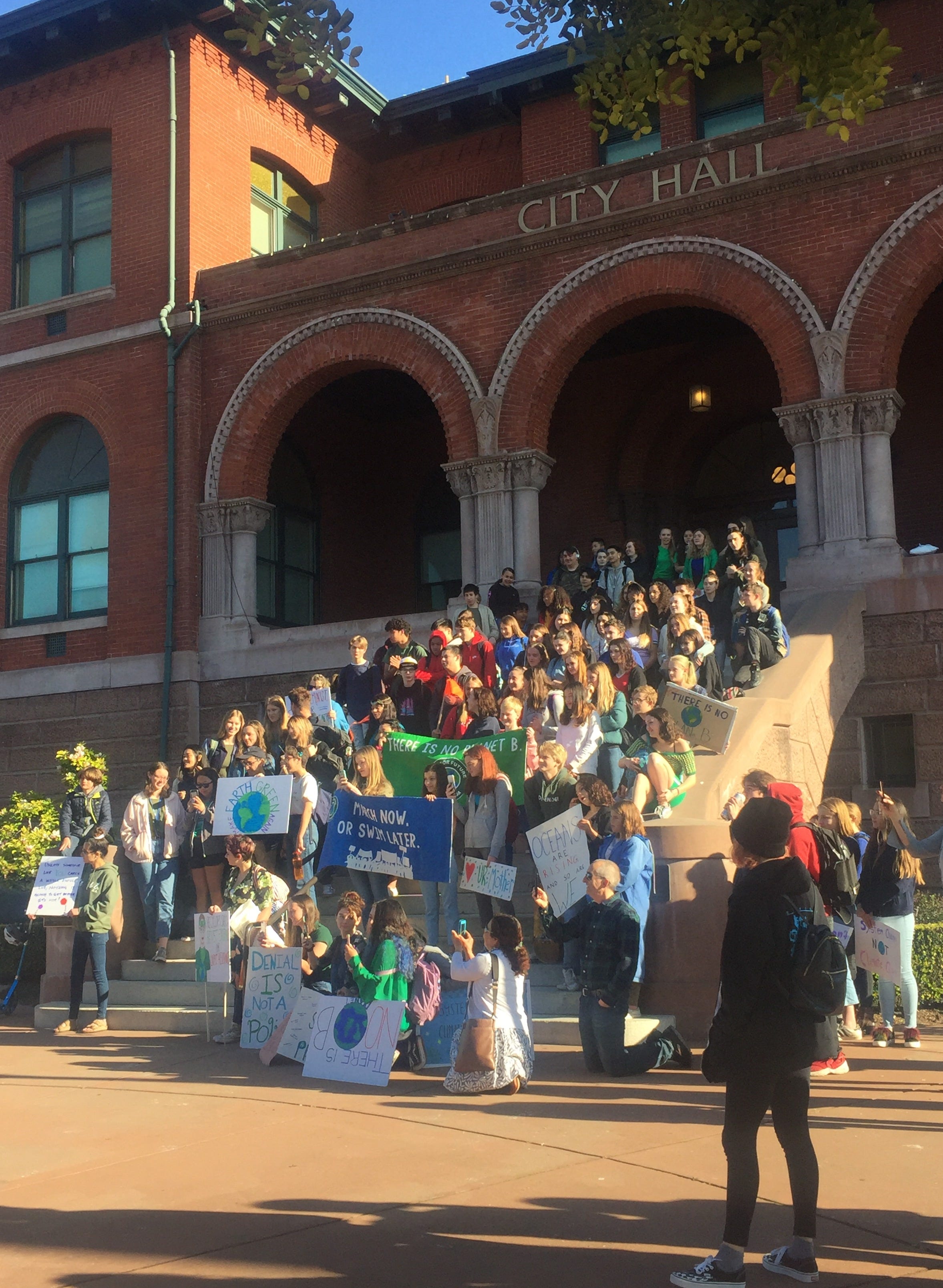
I first noticed this when I went to a student-led climate rally in my town in 2019: 80% of the students on the steps of City Hall with their protest signs and banners appeared to be girls.
Later that year, I went to a Climate Reality training with Al Gore in Minneapolis and spent 3 days in a convention hall with 1,000 other attendees. Eyeballing it, less than 20% of those 1,000 people were men, and of those, almost all looked to be either under 25 or past retirement age. In other words, working-age men – those people who currently hold most of the power in our society – were not showing up to learn about what they can do about one of the biggest threats humanity has ever faced.
My own question adds a comma to the one I got last week: “Why not, Papa Bear?”
In the world of work, climate jobs in well paid, technical fields like clean energy are male dominated. In the US, female founders in climate tech only get 0.4% of the funding for start-ups vs. male founders (despite generating 2x higher revenue and faster exits). Where there is money to be made, men are there. But when it comes to taking action just because you care, men can be harder to find.
And it’s not just climate. Since the 1980s, more women vote than men and evidence shows since 2020 more women are showing up at protests.
A 2016 study showed that environmentally friendly behavior is also perceived as feminine, both by the people who do it and the people who don’t; it also showed that whether or not men will engage in green behaviors is determined by whether or not it threatens or affirms their masculinity.
Has caring about anything but yourself and money been coded female?
And why is being seen as feminine bad? I could speculate that it’s because our patriarchal society robs men of experiencing their full emotional spectrum, just as it has been robbing women of just about everything else since its beginning. In the patriarchal mindset, men are on top, which makes being seen as feminine on the bottom.
Green = female = lesser than; ergo, I do not recycle.
One of the hardest things for me about writing a book is not the work, it’s trying not to write about everything, which in this case includes fully analyzing the role of patriarchy in climate action. I don’t have all the answers here. What I do know is motherhood and mothers. I know how we stretch ourselves to do the impossible under remarkable constraints, and how we would do anything to protect our kids. I want to be a part of activating this powerful energy to protect all of us.
During the horrific school shooting in Uvalde, Texas, in May 2022, where 19 children and two teachers were gunned down, parents gathered at the school and confronted police about why they weren’t going inside and trying to stop the shooter. Videos show the police tasing and pepper spraying parents to stop them from trying to go in and rescue their kids. But one mother, Angeli Gomez, after being released from handcuffs by US Marshals, scaled the school’s chain link fence, went inside, got her kids out of two different classrooms, and left the building – while the shooting was still going on.
That kind of bravery and fearlessness is what should be female coded. That is the Mama Bear energy that I believe we can tap into to protect our kids’ future.
At the event last week, I told the two men I was talking to about how in my podcast I am going to start including interviews with women whose stories and actions I want to elevate. They both said they wanted to hear those stories and there should be more of them out there for men to hear.
They weren’t asking me why I wasn’t elevating men, but why I wasn’t including men in who I am trying to reach.
There are lots of men doing good work every day, showing up for women and common causes, and making the world a better place. I’ve worked in sustainability for over two decades and know many men like this. I want more men to care and am ready to reach the men who already do – I just wonder if they will listen.


